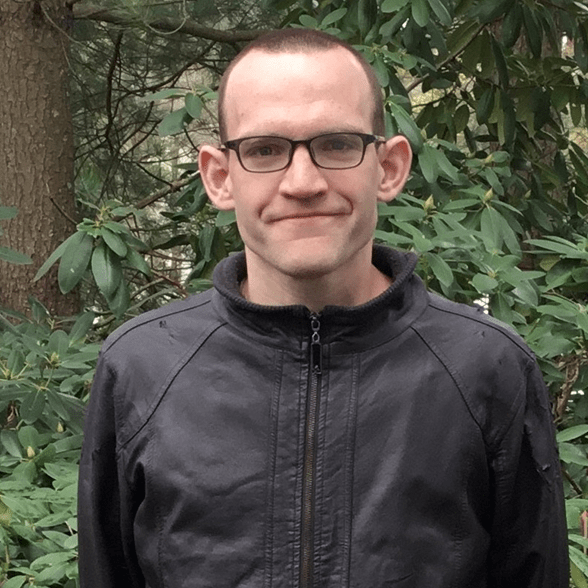
Meet John LaRocco
“If knowledge can create problems, it is not through ignorance we can solve them.” -Isaac Asimov
New Jersey native John Larocco moved to New Zealand to finish his studies in electrical engineering. Since then, he has lived across the USA, Singapore, and South Korea. He has worked on projects in automation, artificial intelligence, magazine publishing, medical technology, forensics, and archeology.
Across his life, John pursued his personal research projects. He developed the first full-body prosthetic, the first forensic technique specifically for 3D printed guns, an artificial lung, a brain-computer interface for robot control, an automated drowsiness detection system, and an online archive of historical machinery. Since 2018, he published an independent speculative fiction magazine containing works by up-and-coming authors.
John has experienced poverty abroad and endured through it, and he has always assisted those in need. He assisted nonprofits and companies providing low-cost, open-source technology for developing countries. Having experienced hardship abroad, he believes mutualist ideas can succeed where traditional government solutions would fail.
Social Stability
Over half of American jobs are at risk from being replaced by robots in the next decade. Having worked in artificial intelligence and robotics, I believe this is an understatement. Universal basic income was proposed as a possible solution, but the fiscal logistics are overwhelming. There is a proven solution to this very problem, which predates the basic income.
The existing Earned Income Tax Credit is the only remnant of a Nixon-era experiment with the negative income tax. It allows for support for those below a certain threshold. My administration would expand the EITC to cover the cost of living, and it would be readjusted every year to account for inflation. Older jobs may be automated, but the EITC would facilitate another American tradition: self-sufficiency.
Self-employment was the norm for most of American history. With the expanded EITC, Americans would be free to turn their passions into professions. From artists, movie makers, and writers to small farmers to citizen scientists, all would be able to invent and inspire. American culture appeals around the world, and the EITC would ensure that appeal remains. Without it, an entire generation of artisans and artists will toil with no future, due to industrial automation. Similarly, it would provide a wider range of technologies for defending America by freeing up would-be inventors, and it would support medical care for vulnerable citizens.
Energy Security
It is human nature to turn crisis into opportunity. The economic and environmental crises we face are often pitted against each other, but having worked in the energy industry, I believe that is a false dichotomy.
Renewable energy is desirable. However, current renewable infrastructure still requires petrochemical-based components and maintenance. The dependence on rare earths for batteries and electronics can cause as much pollution as older technologies. Upgrading current infrastructure would take years and come with heavy costs. There is an alternative.
Chemical engineering advances allow the conversion of atmospheric carbon dioxide into combustible, carbon-neutral fuels. My administration will support research to put a device like this in every American household. Instead of leaving millions of abandoned oil and gas fields to rust, they will be converted into carbon neutral industrial facilities to take full advantage of existing infrastructure and provide jobs in both old and new sectors.
Diversified technologies will be used to ensure national energy security. Other technologies, such as artificial photosynthesis, thorium reactors, and fusion, will be supported by private-public partnerships. I worked with researchers to develop devices to capture water from the air, improve the accessibility of sustainable solutions, and provide food. These advances will ensure prosperity on Earth and beyond. The process will greatly facilitate commercial spaceflight.
Gun Policy
The Second Amendment is cited in the context of defending persons, property, and liberty. However, it is perhaps the most potent tool for citizen science in the world. While used in recreation, firearms are effective tools in research and industry.
Amateur engineers build potato cannons in their backyards. Field biologists use tranquilizer dart guns for delivering drugs to animals. Physicists model high speed collisions with light gas guns. Re-enactors use antique firearms and reproductions for experimental archeology. Carpenters used powder-driven nailers. Sailors attach vessels for towing with line launchers. Engineers are even working on space cannons to reduce the costs of satellite launch.
I was the first person to propose a forensic technique specifically for 3D printed guns, a way of determining if one was discharged based on small deformations. I believe that excessive misinformation about 3D printing and guns hinders effective understanding of both. Citizen science requires accessibility, and that includes the right to build firearms for recreation and experimentation. I will defend the right of citizens to share that information for non-commercial purposes. However, the original purpose of the Second Amendment must not be forgotten.
The right of self-defense must be available to all Americans. I will act to implement a nationwide reciprocal concealed carry program for eligible individuals. Reducing violent crime, terrorism, and extremism through social interventions and improved access to mental healthcare is a proven, more effective method than reactionary restrictions.
Health
Improving health care accessibility and reducing costs is a high priority for my administration. I will open a national telemedical service that all Americans can use for immediate response. I will also permit telemedical residencies to facilitate hiring qualified physicians.
I will streamline the research for medical drug and device development. As the inventor of the first full-body prosthetic and a tissue oxygenation system, I aim to advance artificial organ technology to reduce the need for donors. Artificial hearts have existed for over four decades, but artificial lungs, kidneys, and other organs are already in clinical trials. I would develop a roadmap to develop artificial alternatives for every organ in the body.
In addition to research, I would ensure access to affordable medications. I will fund the development of biosimilars and generic drugs. I will ensure there are ample supplies for these at a state level. I would encourage preventive care programs to improve national health and lifespan. I will start with improving long-term outcomes in patients, and ideally, preventing disease in the first place. This includes promoting fitness to more cutting-edge programs, like cancer immunotherapy, age reversal, and senolytics. I will aim to lower cost and improve accessibility of these procedures. Volunteer-based free clinics are already present across America. I will offer these, and the volunteers working there, deductibles and support based on the expanded EITC program. This will encourage physicians to volunteer, allowing new medical personnel to clear their debts and directly support society.
Innovation
The combination of scientific and cultural power has potential to move America. Without new ideas, the wellspring of cultural, scientific, and economic change evaporates. Innovation is the lifeblood of American society. Without it, there would be no automobile, no flight, no space program, no personal computers, and no internet. My administration would focus on allowing more Americans to innovate in areas ranging from technology to art.
Similarly, my expanded EITC program would enable Americans to preserve our traditions for future generations. From small farms to performance arts to 3D printing, society is richer with more arts, crafts, and sciences. Foreign adversaries would be unable to follow them all. That is why I believe innovation and creativity are key to economic and strategic security.
My administration will facilitate basic research and innovation to citizens. We will strike down unconstitutional limits on the freedom of speech. We will offer satellite internet to all Americans. We will expand public libraries. We will use national innovation challenges to harness the country’s problem-solving abilities. We will enable students to earn degrees from free, open online classes. We will create artificial intelligence legal advisors to provide improve justice for all. In addition, we will promote a new international pact for supporting citizen science and art.
Data and Fiscal Security
Over two-thirds of the country lack a thousand dollars in savings, making Americans vulnerable to economic instability. Every day, Americans produce the world’s most valuable commodity: Data. All the data we produce from our daily lives is used to train AI. The AI systems trained on this data can grant economic, political, and strategic power.
Thus, data is a commodity as important as oil. Like oil, it will support economic growth. The government already pays Big Tech for access to data citizens produce, ripping off the public. This will end under my administration. You will be reimbursed for the digital data you produce, both directly and indirectly.
A sovereign wealth fund is essentially a civic trust fund. My administration will develop a sovereign wealth fund to support its new projects. As citizens are entitled to compensation for their data, internet providers and technology companies would be paid based on data provided. These payments would be used as the core for a sovereign wealth fund. I would also seek donations from wealthy individuals and parties, with tax breaks for those philanthropists that do. The sovereign wealth fund will be used to initialize and maintain infrastructure and research. The national fund would be based on natural resources and data sales. The sovereign wealth fund will be adjusted for inflation each year, and a portion of it will be used to repay the national debt.
In addition to a national sovereign wealth fund, smaller ones will be established in each state or territory. Based on the data generated, voters in each state will be able to determine how to save, invest, and spend their own sovereign wealth funds. They will be used to support local infrastructure, healthcare, research, development, and other projects. Alaska and Texas already have state-level models that will be used as a template for the national model. My EITC program would provide a much-needed economic stability. Economic volatility directly fuels polarization, extremism, and depression. That instability cloud be used by America’s enemies to strike directly at its heart. Thus, my programs would enable development and defense in all regards. If we do not provide dignity to all Americans, we have no future.
National Security Strategy
American security is much more than the military. America has traditionally relied on supporting research for a military advantage. To expand this, we will establish basic research collaborations with allies and reliable partners. This cost-sharing would offset the costs of projects too expensive for a single nation. This will include deployment of carbon-neutral fuel facilities, aerospace facilities, and industrial logistics.
The development of decentralized logistics would improve overall readiness and coordination with allies. Each Army Brigade Combat Team and Marine Corps Regimental Combat Team would have its own logistics, communications, and engineering units, and it would be able to relocate these assets as the need presents itself. This would enable support for allied militaries, disaster relief operations, and peacekeeping missions.
The core of American defense is the courage of its citizens. In order to ensure a motivated military, I will ensure military credentials will be recognized in the civilian world. This would help veterans’ transition back into the civilian workforce. This would be the first step in a comprehensive veteran re-integration and support system. Those who have fought for us deserve for us to fight for them.
Defeating Extremism
Defeating extremism and terrorism involves far more than security forces. There will always be individuals and groups seeking to inflict harm, but there are proven ways to minimize their influence. Some radicalism springs from economic instability. I would provide economic security to counter this. My expanded EITC program would reduce uncertainty and poverty, and thus, the appeal of extremism to the desperate.
Violent extremists and macabre public deeds inspire copycats through excessive media coverage. This is well known in social psychology as the Werther Effect. A related term in literature is Herostratic fame, for the infamous arsonist who murdered for attention. Based on voluntary CDC guidelines on reporting public suicides, I will issue similar voluntary reporting guidelines to deny extremists the attention they crave.
Censorship of material will have the opposite effect, drawing excessive attention where little would exist. By reducing the media profile of mass killers and maniacs, there will be less following in their footsteps. Similarly, my medical policy would allow for easy, stigma-free access to mental healthcare. Thus, my plan to defeat extremism is a combination of economic stability, mental health access, and reporting strategies.
Democratizing Justice
The United States has a prison population of non-violent offenders that would be more productive outside of bars. I would institute a review of each prisoner’s case, assisted by volunteers and nonprofit organizations. In addition, I would make expunging non-violent cases easier for former inmates. I also would launch an AI strategy to improve court outcomes.
Law firms around the world are developing artificial intelligences to provide legal advice. This may sound like science fiction, but the core concept was demonstrated since 2016. I would develop open-source AI legal advisors for all Americans. This would improve legal representation in the criminal justice system and beyond.
The legal advisor frameworks would be constantly updated and developed for a variety of applications. From tax returns to car insurance, they would save billions in costs, stress, and time. I would additionally employ this concept for international law, in order to advance American interests abroad.
Educational Strategy
Our current educational system is a relic of the industrial age, dulling the curiosity instead of stimulating students. As a former tutor, I have done my best to make the curriculum interesting to each student. Based on work in Finland and several private American schools, I would update teaching lessons to include gamification and reducing the role of standardized tests.
With my EITC expansion program, teachers would be eligible to earn higher salaries through online credentials. This would supplement existing wages for public school teachers, private school teachers, and homeschooling parents. These additional skills would include areas from emergency preparedness to programming to shop class.
I would seek to streamline credential recognition to improve educational opportunities. These include civilian recognition of military credentials, qualified foreign medical professionals gaining the ability to practice in the US, and improving access to education materials. Education comes in many forms, and I would take the best of all worlds.
 Larocco for President